
Planks, Paint, and Proud Kids: Woodworking Family Fun at Home
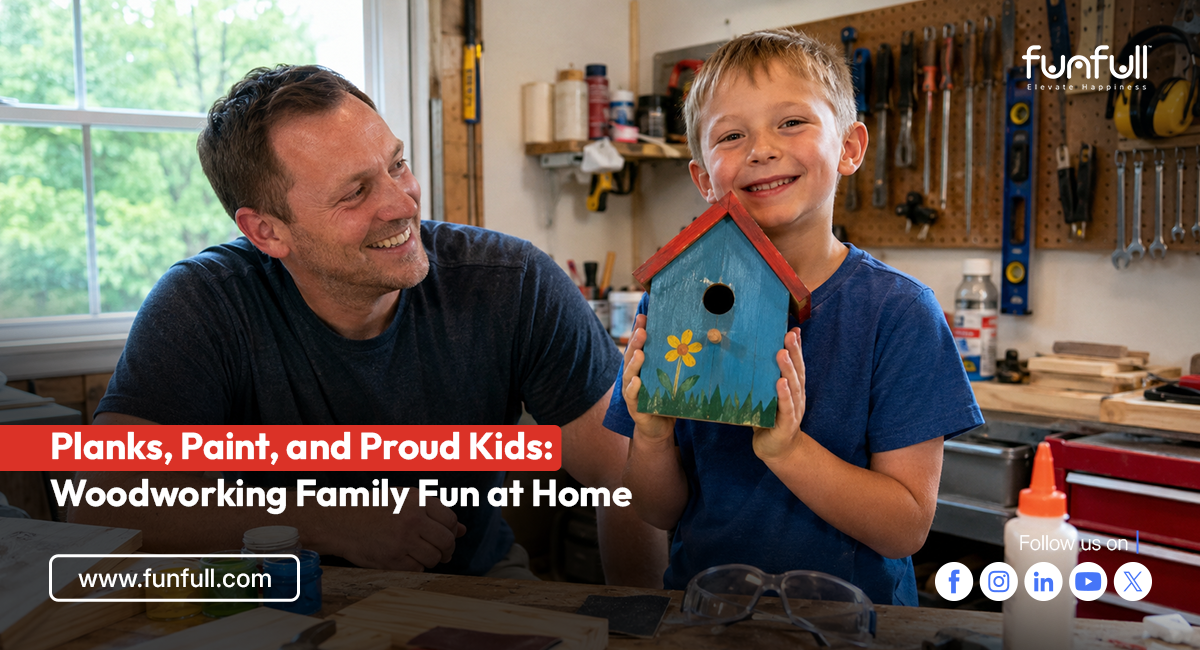
There's something genuinely powerful about watching your kid hold up something they built with their own hands. All you need is some wood and a few tools. Woodworking is one of those fun things to do at home that sounds intimidating at first, but turns out to be one of the most rewarding family activities you'll ever try.
Table of Contents
- Why Woodworking Works for the Whole Family
- Getting Started: Tools, Safety, and Setup
- Easy First Projects to Try with Kids
- Making It a Creative Experience, Not Just a Craft
- Key Takeaways
- FAQs
1. Why Woodworking Works for the Whole Family
Most indoor activities for family fun fall into two camps: passive (watching something) or mildly active (board games, puzzles, etc.). Woodworking is neither. It's fully hands-on, genuinely skill-building, and produces something real at the end. That combination is rare, and kids respond to it in a way that's hard to replicate with other activities.
It also has a natural learning curve that works in your favor as a parent. Younger kids can sand, paint, and assemble. Older kids can measure, cut, and plan. Adults can guide without hovering. Everyone has a role, everyone contributes, and the finished product belongs to all of you. That sense of shared ownership is what makes woodworking one of the best things to do with kids at any age.
2. Getting Started: Tools, Safety, and Setup
The good news is that you don't need a fully kitted workshop to get started. A small corner of the garage, a sturdy workbench or table, and a basic starter set of tools is genuinely all it takes for beginner family projects.
For first-timers, keep it simple - a hammer, nails, sandpaper, wood glue, a hand saw, and some pre-cut lumber from your local hardware store covers most beginner builds. Safety comes first, especially with kids involved.
Setting ground rules, such as eye protection, no rushing, and a clean workspace, builds good habits that stick. And making safety feel like part of the craft rather than a lecture goes a long way with kids who just want to get building.
3. Easy First Projects to Try with Kids
The trick to keeping kids excited about woodworking is starting with projects they care about. Abstract skill-building is boring. Building something they actually want? That's motivating.
Great beginner projects include a simple wooden birdhouse, a painted step stool, a personalized picture frame, a small shelf for their bedroom, or even a basic wooden toolbox that they can decorate themselves. These are achievable in a single weekend session, which matters as kids need to see a finished result to stay invested.
As confidence grows, you can move into slightly more complex builds, such as a garden planter box, a small bookshelf, or a painted sign for their bedroom door. Every completed project is a confidence deposit that makes the next one feel more exciting than intimidating.
4. Making It a Creative Experience, Not Just a Craft
Woodworking really shines as one of the best family activities when you let creativity take the lead. The building is just the beginning - painting, staining, decorating, and personalizing a finished piece is where kids truly make it their own.
Let them choose the colors, paint their name on it, and add stickers, stamps, or freehand designs with craft paint. A plain wooden birdhouse becomes a masterpiece when a seven-year-old gets to go wild with a brush. That creative freedom is what transforms a woodworking session from a skill lesson into a full family experience worth repeating.
.png)
Key Takeaways
- Woodworking is one of the most rewarding and fun things to do at home for families of all skill levels.
- Simple tools and beginner-friendly projects are all you need to get started with kids at home.
- Assigning age-appropriate roles keeps everyone involved and builds real confidence in children.
- Adding painting and decoration makes woodworking a full creative experience, not just a build.
FAQs
1. At what age can kids start learning woodworking at home?
Kids as young as 4 or 5 can participate in sanding and painting, while children aged 8 and up can begin learning basic measuring and assembly with adult supervision. Older kids and teens can take on more complex tasks as their confidence grows.
2. What are the easiest woodworking projects to try with kids?
Birdhouses, picture frames, step stools, and small shelves are all great first projects. They're simple enough to finish in a weekend session and satisfying enough to keep kids motivated to try the next one.
3. Is woodworking safe to do with young children at home?
Yes, it is safe with the right precautions. Start with age-appropriate tasks, use safety gear like protective eyewear, keep the workspace organized, and supervise closely whenever tools are involved. Building safe habits early makes the whole experience more enjoyable and stress-free.
4. Where can I find tutorial videos for woodworking at home?
Funfull is a great starting point; it offers free, beginner-friendly video tutorials covering woodworking, knitting, painting, cake decoration, photography, and plenty more fun things to do at home with your family.