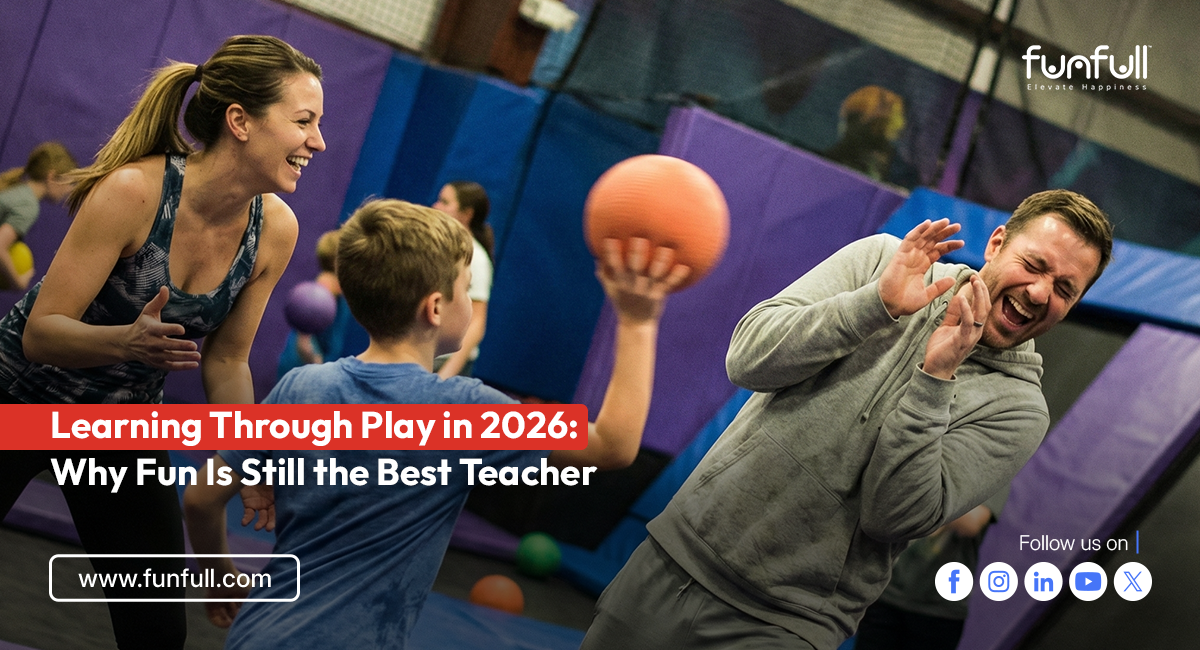
Learning Through Play in 2026: Why Fun Is Still the Best Teacher
TL;DR
In 2026, learning won’t be enough with worksheets or structured lessons for kids, but play will continue to be one of the most supportive ways to learn socially, emotionally, and physically.
This blog explains why play remains equally effective, and its relevance will continue into 2026 as well, highlighting how learning naturally occurs through enjoyable and fun activities, and how families can support learning without turning every moment into a formal lesson.
Why “Learning” Still Sounds Too Serious Sometimes
As soon as any parent hears the word learning, the first thing they encounter is the question of difficulty, pushing them to “how will it be?”
On the other hand, play feels much lighter. It can look fun, loud, and chaotic at times, and because of that, it’s easy to underestimate how much learning is actually possible during those moments.
But in 2026, more families are recognizing something important: kids don’t stop learning when they’re having fun.
What Learning Through Play Actually Looks Like
Learning through play doesn’t require any special tools or carefully designed lessons. It often happens in everyday situations where kids are simply engaged or curious to do fun activities for kids.
Through play, kids naturally practice:
- Problem-solving when rules change or challenges come up
- Communication while explaining ideas or negotiating turns
- Creativity when they imagine, build, or invent something new
These skills are developed not because a child is told to learn them, but because play gives them a reason to use them, and they do.
Why Play Will Works So Well in 2026
Even as education evolves and new tools appear, the way children learn at a fundamental level hasn’t changed much.
Play works because:
- It keeps kids engaged for longer periods
- It allows mistakes without pressure
- It connects learning to positive emotions
When kids enjoy what they’re doing, they’re more likely to explore, ask questions, and try again after something doesn’t work. That process-trying, adjusting, and continuing-is learning in its most natural form.
In 2026, this understanding feels especially relevant as families look for balance instead of constant structure.
How Families Are Making Learning Through Play Easier in 2026
As families look forward to learning through play in 2026, one practical question keeps coming up: how do we make this a regular occurrence?
This is where platforms like Funfull naturally support everyday family life by offering access to a wide mix of activities, out-of-home experiences, and at-home creative options.
Funfull’s FunPass helps families keep play varied without the need for constant planning or high costs.
Instead of committing to one activity at a time, families can explore different ways kids learn best, based on mood, energy, and interest.
Some of the ways Funfull supports learning through play include:
- Variety across activities, helping kids build social, physical, and creative skills
- A balance of out-of-home and at-home options, fitting different schedules and energy levels
- Affordable access through a single pass, compared to paying separately for each outing
- Flexibility to try, repeat, or switch activities, as kids’ interests change
By reducing barriers around cost and planning, Funfull makes it easier for families to let play-and learning-happen more often, in ways that fit real life.
.png)
Social and Emotional Learning Happens Quietly During Fun
Some of the most important learning through play isn’t academic at all.
While playing, kids often learn how to:
- Take turns and wait patiently
- Handle disappointment when things don’t go their way
- Celebrate small wins and shared successes
These moments don’t usually come with explanations or instructions. They happen in real time, shaped by interaction and experience.
Over time, repeated play experiences help kids build confidence and emotional awareness without formal lessons.
Movement, Play, and the Learning Connection
Play often includes movement, even when it doesn’t look like exercise.
Climbing, running, bouncing, throwing, or balancing all help kids understand their bodies and surroundings. Movement supports coordination, focus, and energy regulation-things that also affect how kids learn in other settings.
In 2026, many families are noticing that when kids move more through fun activities, they’re often calmer and more focused afterward.
Supporting Learning Without Overdirecting It
One of the biggest shifts for parents is learning when not to step in.
Supporting learning through play often means:
- Letting kids lead the activity
- Allowing repetition, even if it feels boring to adults
- Resisting the urge to turn play into a lesson
When play stays playful, kids stay curious. When it becomes instructional, interest can fade quickly.
Why Fun Still Matters Going Forward
As families think about learning in 2026, many are choosing to trust play a little more.
Fun doesn’t replace learning. It supports it. It creates space for kids to explore skills at their own pace and in their own way.
When learning feels connected to joy, kids are more likely to carry curiosity with them-not just into school, but into everyday life.
And that’s why, even in 2026, fun remains one of the best teachers kids have.